Ancient Egyptian Jewelry
Showing posts with label Ancient Egypt Pictures. Show all posts

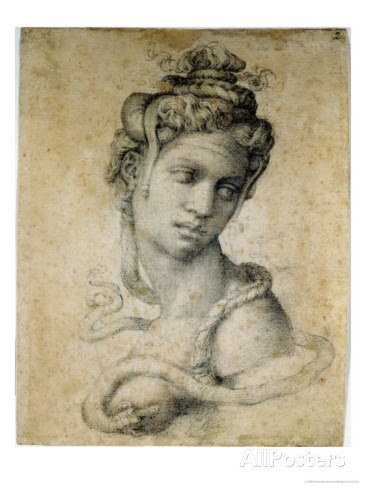
$49.99 Cleopatra by Michelangelo Buonarroti (1475 – 1564)


 Cleopatra by Michelangelo Buonarroti
Cleopatra Giclee Print by Michelangelo Buonarroti (1475 – 1564).
Size: 14x24 in
High-quality paper (235 gsm)

Available on Allposters.com


Relief of Ptolemy VIII, Cleopatra II and Cleopatra III


Ptolemy VIII stands in front of his two wives: Cleopatra II 'the sister' and her daughter, Cleopatra III 'the wife'.
Temple of Sobek and Harouris (Horus the Elder), Kom Ombo.

Pictures: Hetepheres II


Hetepheres II, daughter of ancient Egyptian king Khufu, married as many as three royal brothers, yet never produced an heir to the throne.

Pictures: Queen Hetepheres Chamber


The packed chamber containing the disorganized and very fragile burial equipment of Queen Hetepheres, with a reconstruction drawing showing how the grave goods may have looked when originally deposited.

Pictures: Rahotep and Nefret


Rahotep, son of Snefru, and his wife Nefret, discovered in their Meidum
mastaba
in 1871. Their eyes, inlaid with rock crystal and quartz, give the
statues a particularly life-like appearance and terrified the local workmen
charged with excavating their tomb. Cairo Museum.

Pictures: Djoser Step Pyramid's Plan


Djoser extended and re-extended his stone mastaba until
it became an imposing stairway
(the famous Step Pyramid) that would allow the
dead king to ascend to the sky. Shafts beneath
the original mastaba were provided for
lesser royal burials.
Related articles

Pictures: Djoser's limestone Stelae


Fragment of one of Djoser's limestone boundary stelae from his Step Pyramid complex at Saqqara. Ancient Egypt History.

Pictures: Djoser on Throne


Djoser sits on his throne, one hand in his lap, the other (now vanished) holding his ceremonial flail. He is supported by three royal women whose miniature size serves to emphasize the king's greatness. This is one of 36 surviving fragments from Djoser's limestone shrine dedicated to the god Ra at Heliopolis. Ancient Egypt History.

Pictures: Mastaba Tomb K1. Beit Khallaf. Queen Nimaathap


Mastaba Tomb K1, Beit Khallaf, assigned to ancient Egyptian Queen Nimaathap. Later generations would revere Nimaathap, wife of Khasekhemwy (2nd Dynasty) and mother of Djoser (3rd Dynasty), as the ancestress of the 3rd Dynasty.

Related articles

Pictures: Meritneith Seal Impression


Meritneith lived at a time when writing was just developing. This seal impression, recovered from her Abydos tomb, features wine jars, suggesting that it comes from a wine jar from one of the royal estates. Ancient Egypt History.

Pictures: Meritneith Funerary Stelae


One of the pair of funerary stelae provided for the tomb of
Meritneith (Tomb Y, Umm el-Qa'ab, Abydos).

Pictures: Bracelets at the Great Tomb at Naqada


Four beaded bracelets (now in Cairo Museum), and the earliest known example of artificially mummified arm, recovered from the Abydos tomb of Djer. The subsequent, deliberate destruction of the arm serves as an important reminder of the vast amount of archaeological information that has been lost (deliberately or through ignorance) by those responsible for its recovery and preservation.

Pictures: Neithhotep's Bracelet


The Great Tomb at Naqada yielded artifacts dating to the early 1st Dynasty. A series of carved ivory labels were originally attached to jewelry and other grave goods. This example in the British Museum displays the number forty. Neithhotep's bracelet (here re-threaded) is made from plaques of ivory and slate. Liverpool University Museum.

Pictures: Great Tomb at Naqada.


The Great Tomb at Naqada, first assigned to King Aha/Menes, as now believed to have belonged to either Aha's mother, Neithhotep, or to an anonymous local dignitary. The impressive size and sophisticated design of the mud-brick tomb reveal the skill of the Early Dynastic builders. Ancient Egypt History.

Pictures: The Limestone Narmer Macehead


The limestone Narmer Macehead was one of a set of votive items known as the 'main deposit', discovered buried under the floor of the Old Kingdom temple of Hierakonpolis. The Macehead had been shattered, and only a tantalizing fragment of the original scene now survives.
Related articles

Pictures: Narmer Palette.


Narmer Palette, Ancient Egypt History Pictures
The Narmer Palette reveals how, at the dawn of the dynastic age, the propaganda and regalia of kingship are already well developed. In a scene that will be repeated time and time again, the king is shown defeating the enemies who threaten to bring chaos to his land. Cairo Museum. Ancient Egypt History.

Pictures: Ankhesenamun and Tutankhamun


On this inlaid box lid Ankhesenamun, daughter of Akhenaten and Nefertiti, offering a bouquet of lotus blossoms to her husband and probable half-brther Tutankhamun. Found in Tutankhamun's tomb at the Valley of the Kings and now in Cairo Museum. Ancient Egypt History.
Related articles

Picture: Ambassador and General Maya and his Wife Urol. Tomb of Ramose.


Relief from the tomb of the ancient Egyptian vizier Ramose showing the chariotry general and the king's ambassador, Maya and his wife, Urol.

Picture: Talatat showing Amorite and Sudanese Auxiliary Troops


Talatat from the ninth pylon showing Amorite and Sudanese auxiliary troops.
Throughout ancient Egyptian art Amorites are easily distinguished by their long beards and clubbed hair,
tied around with a filet.

Picture: Shabti of Queen Karomamas


Much of our information concerning ancient Egypt's queens comes from a funerary context, and is far less informative than we would like. This poorly made shabti figure was sculpted for the burial of one of the Queen Karomamas.

Showing posts with label Ancient Egypt Pictures. Show all posts

$49.99 Cleopatra by Michelangelo Buonarroti (1475 – 1564)

 Cleopatra by Michelangelo Buonarroti
Cleopatra Giclee Print by Michelangelo Buonarroti (1475 – 1564).
Size: 14x24 in
High-quality paper (235 gsm)

Available on Allposters.com


Relief of Ptolemy VIII, Cleopatra II and Cleopatra III

Ptolemy VIII stands in front of his two wives: Cleopatra II 'the sister' and her daughter, Cleopatra III 'the wife'.
Temple of Sobek and Harouris (Horus the Elder), Kom Ombo.

Pictures: Hetepheres II


Hetepheres II, daughter of ancient Egyptian king Khufu, married as many as three royal brothers, yet never produced an heir to the throne.

Pictures: Queen Hetepheres Chamber

The packed chamber containing the disorganized and very fragile burial equipment of Queen Hetepheres, with a reconstruction drawing showing how the grave goods may have looked when originally deposited.

Pictures: Rahotep and Nefret

Rahotep, son of Snefru, and his wife Nefret, discovered in their Meidum
mastaba
in 1871. Their eyes, inlaid with rock crystal and quartz, give the
statues a particularly life-like appearance and terrified the local workmen
charged with excavating their tomb. Cairo Museum.

Pictures: Djoser Step Pyramid's Plan

Djoser extended and re-extended his stone mastaba until
it became an imposing stairway
(the famous Step Pyramid) that would allow the
dead king to ascend to the sky. Shafts beneath
the original mastaba were provided for
lesser royal burials.
Related articles

Pictures: Djoser's limestone Stelae

Fragment of one of Djoser's limestone boundary stelae from his Step Pyramid complex at Saqqara. Ancient Egypt History.

Pictures: Djoser on Throne


Djoser sits on his throne, one hand in his lap, the other (now vanished) holding his ceremonial flail. He is supported by three royal women whose miniature size serves to emphasize the king's greatness. This is one of 36 surviving fragments from Djoser's limestone shrine dedicated to the god Ra at Heliopolis. Ancient Egypt History.

Pictures: Mastaba Tomb K1. Beit Khallaf. Queen Nimaathap


Mastaba Tomb K1, Beit Khallaf, assigned to ancient Egyptian Queen Nimaathap. Later generations would revere Nimaathap, wife of Khasekhemwy (2nd Dynasty) and mother of Djoser (3rd Dynasty), as the ancestress of the 3rd Dynasty.

Related articles

Pictures: Meritneith Seal Impression

Meritneith lived at a time when writing was just developing. This seal impression, recovered from her Abydos tomb, features wine jars, suggesting that it comes from a wine jar from one of the royal estates. Ancient Egypt History.

Pictures: Meritneith Funerary Stelae

One of the pair of funerary stelae provided for the tomb of
Meritneith (Tomb Y, Umm el-Qa'ab, Abydos).

Pictures: Bracelets at the Great Tomb at Naqada


Four beaded bracelets (now in Cairo Museum), and the earliest known example of artificially mummified arm, recovered from the Abydos tomb of Djer. The subsequent, deliberate destruction of the arm serves as an important reminder of the vast amount of archaeological information that has been lost (deliberately or through ignorance) by those responsible for its recovery and preservation.

Pictures: Neithhotep's Bracelet


The Great Tomb at Naqada yielded artifacts dating to the early 1st Dynasty. A series of carved ivory labels were originally attached to jewelry and other grave goods. This example in the British Museum displays the number forty. Neithhotep's bracelet (here re-threaded) is made from plaques of ivory and slate. Liverpool University Museum.

Pictures: Great Tomb at Naqada.

The Great Tomb at Naqada, first assigned to King Aha/Menes, as now believed to have belonged to either Aha's mother, Neithhotep, or to an anonymous local dignitary. The impressive size and sophisticated design of the mud-brick tomb reveal the skill of the Early Dynastic builders. Ancient Egypt History.

Pictures: The Limestone Narmer Macehead

The limestone Narmer Macehead was one of a set of votive items known as the 'main deposit', discovered buried under the floor of the Old Kingdom temple of Hierakonpolis. The Macehead had been shattered, and only a tantalizing fragment of the original scene now survives.
Related articles

Pictures: Narmer Palette.

Narmer Palette, Ancient Egypt History Pictures
The Narmer Palette reveals how, at the dawn of the dynastic age, the propaganda and regalia of kingship are already well developed. In a scene that will be repeated time and time again, the king is shown defeating the enemies who threaten to bring chaos to his land. Cairo Museum. Ancient Egypt History.

Pictures: Ankhesenamun and Tutankhamun

On this inlaid box lid Ankhesenamun, daughter of Akhenaten and Nefertiti, offering a bouquet of lotus blossoms to her husband and probable half-brther Tutankhamun. Found in Tutankhamun's tomb at the Valley of the Kings and now in Cairo Museum. Ancient Egypt History.
Related articles

Picture: Ambassador and General Maya and his Wife Urol. Tomb of Ramose.


Relief from the tomb of the ancient Egyptian vizier Ramose showing the chariotry general and the king's ambassador, Maya and his wife, Urol.

Picture: Talatat showing Amorite and Sudanese Auxiliary Troops

Talatat from the ninth pylon showing Amorite and Sudanese auxiliary troops.
Throughout ancient Egyptian art Amorites are easily distinguished by their long beards and clubbed hair,
tied around with a filet.

Picture: Shabti of Queen Karomamas


Much of our information concerning ancient Egypt's queens comes from a funerary context, and is far less informative than we would like. This poorly made shabti figure was sculpted for the burial of one of the Queen Karomamas.